Current News:
University launches bus route to serve students, faculty staff
January 23, 2012 -- Kansas State University and the Flint Hills Area Transportation Agency have partnered to create a campus bus route.
The route, which started the first day of the spring semester, serves students, faculty and staff free of charge.
The fixed-route loop connects Kramer Dining Center, Jardine Apartments, the Center for Child Development and Derby Dining Center. The route runs every 30 mi ... More
University launches bus route to serve students, faculty staff
January 23, 2012 -- Kansas State University and the Flint Hills Area Transportation Agency have partnered to create a campus bus route.
The route, which started the first day of the spring semester, serves students, faculty and staff free of charge.
The fixed-route loop connects Kramer Dining Center, Jardine Apartments, the Center for Child Development and Derby Dining Center. The route runs every 30 mi ... More
University launches bus route to serve students, faculty staff
January 23, 2012 -- Kansas State University and the Flint Hills Area Transportation Agency have partnered to create a campus bus route.
The route, which started the first day of the spring semester, serves students, faculty and staff free of charge.
The fixed-route loop connects Kramer Dining Center, Jardine Apartments, the Center for Child Development and Derby Dining Center. The route runs every 30 minutes from 7 a.m. to 9 p.m. on weekdays. Students, faculty and staff must show their university-issued identification card to ride the bus without paying.
"This bus route will not only provide quick access, but it will help keep our students safe," said Derek Jackson, director of housing and dining services. "Students living in Jardine had to drive or walk to the Kramer or Derby dining centers to eat meals, which could pose issues during inclement weather and late hours."
The bus serving the route can transport up to 20 passengers. It has a bicycle rack and is equipped with a lift to accommodate those using a wheelchair.
"We always listen carefully to the concerns of our students and take them seriously," said Pat Bosco, vice president for student life and dean of students. "This pilot route is a great step forward to meeting the needs of Kansas State University students and families, and it would not have been possible without the leadership of housing and dining services staff."
The Flint Hills Area Transportation Agency offers transportation services in the university's SafeRide program, which provides free, safe rides home to students in threatening situations. The nonprofit agency also provides transportation to students using disability support services.
"We are very excited about this partnership and are grateful for the opportunity to further serve Kansas State University students," said Anne Smith, director of the Flint Hills Area Transportation Agency. "We look forward to working together and believe the university will be a critical partner in providing more transportation services throughout the community."
LessWhen less means more: Print messages help students reduce food waste at dining center
January 12, 2012 -- To decrease food waste, hold the trays and add posters.
That's what Kelly Whitehair found while researching food disposed by students at Kansas State University's Van Zile Dining Center. She is an assistant director at the dining center and a December 2011 doctoral graduate in hospitality management and dietetics.
After posters reminded students about food wast ... More
When less means more: Print messages help students reduce food waste at dining center
January 12, 2012 -- To decrease food waste, hold the trays and add posters.
That's what Kelly Whitehair found while researching food disposed by students at Kansas State University's Van Zile Dining Center. She is an assistant director at the dining center and a December 2011 doctoral graduate in hospitality management and dietetics.
After posters reminded students about food wast ... More
When less means more: Print messages help students reduce food waste at dining center
January 12, 2012 -- To decrease food waste, hold the trays and add posters.
That's what Kelly Whitehair found while researching food disposed by students at Kansas State University's Van Zile Dining Center. She is an assistant director at the dining center and a December 2011 doctoral graduate in hospitality management and dietetics.
After posters reminded students about food waste during meal services, students threw out 15 percent less food. Posters read: "Eat what you take. Don't waste food."
The finding reveals that simple print campaigns may be an affordable option for food service managers to reduce food waste, Whitehair said.
"All it took to change behavior was a trigger that made students think twice about the topic of food waste before they started eating," she said. "These were just posters I made at home on a word processor. This was not a fancy marketing campaign."
Americans throw away more than 34 million tons of food annually, according to the U.S. Environmental Protection Agency, making up nearly 14 percent of the municipal solid waste stream. Less than 3 percent of that is recovered and recycled.
Whitehair is doing her part with research that could help university dining centers waste less food and implement more sustainable practices.
During the study, Whitehair and students enrolled in an environmental issues in hospitality course scraped food waste -- everything from ketchup and ranch dressing to buns and vegetables -- off of more than 11,000 food trays at Van Zile. They scraped trays five days a week during lunch and dinner.
Whitehair analyzed trays individually. An average of 2 ounces of food was left on each tray, totaling nearly 2 tons of food thrown out during the six-week study. Some students threw out as much as 35 ounces of food scraps, while a third of students threw out nothing.
Whitehair also found that general demographics and beliefs toward sustainability had little impact on the student waste behaviors.
In another part of the study, Whitehair interviewed dining facility managers from universities that no longer use trays. She investigated best practices and student reaction at those dining centers, and she is writing guidelines for schools that are considering not using trays.
Food service managers reported benefits of not using trays, including decreased waste; reduced chemical, water, energy and food costs; and improved student satisfaction.
"They found in customer service satisfaction surveys that people would have much shorter wait times in line because people take less food and make conscious decisions about their food choices beforehand," she said.
Whitehair worked with housing and dining services staff, some of whom teach courses in the department of hospitality management and dietetics.
"We're extremely lucky that housing and dining services works so closely with the College of Human Ecology," she said. "The partnership provides opportunities for students to conduct research at major facilities."
Food waste from Kansas State University's dining centers are composted with other organic waste such as leaves, tree limbs and grains at the university's student farm. University researchers use some of the compost from the North Farm, managed by College of Agriculture students, for erosion, field and greenhouse experiments.
Carol Shanklin, dean of the Graduate School, served as Whitehair's academic adviser. Whitehair earned both her bachelor's and master's degrees from K-State.
LessHouse rules: Housing and dining services staffers receive recognition at annual conference for hard work
December 14, 2011 -- Staff with Kansas State University's housing and dining services spend much of their time making life convenient for those they serve. At a recent conference, these efforts were applauded through various awards to recognize the accomplishment of the department's shining stars.
Staff members attended the Upper Midwest Region of the Association of Col ... More
House rules: Housing and dining services staffers receive recognition at annual conference for hard work
December 14, 2011 -- Staff with Kansas State University's housing and dining services spend much of their time making life convenient for those they serve. At a recent conference, these efforts were applauded through various awards to recognize the accomplishment of the department's shining stars.
Staff members attended the Upper Midwest Region of the Association of Col ... More
House rules: Housing and dining services staffers receive recognition at annual conference for hard work
December 14, 2011 -- Staff with Kansas State University's housing and dining services spend much of their time making life convenient for those they serve. At a recent conference, these efforts were applauded through various awards to recognize the accomplishment of the department's shining stars.
Staff members attended the Upper Midwest Region of the Association of College and University Housing Officers' annual conference Nov. 9-11 in Topeka to learn from other institutions and accept several awards, said Kevin Cook, assistant director for departmental initiatives for housing and dining services.
"The UMR-ACUHO's mission is education, research and service to the college housing profession," Cook said. "Staff members from Kansas State University attend this conference annually to learn the best practices from other institutions and to learn the latest trends in higher education and college housing."
Some of these trends and innovative practices originate from Kansas State. Cook said awards were given to staff members for their professionalism, creativity and ideas. Award winners included:
* Abby Bauer, assistant residence life coordinator in Moore Hall, received the Outstanding New Professional Bachelor's-Level Award, recognizing housing professionals with less than three years of experience.
* Andy Thompson, residence life coordinator in Marlatt Hall, and Adam Isley and Alejandra Vaca, assistant residence life coordinators in the Strong Complex, were recognized for presenting one of the top five best programs at the conference. The trio's program highlighted the "Where's the Fun and Stronger Games" programming series in their hall communities. The same group and program were recognized as the top program for first-time presenters.
* The departmental initiatives team received the Social Justice Action Award for its creation of the Multicultural Resource Center in the Kramer Dining Center, the development of the Diversity Education and Leadership Seminar program and the mentoring of the Housing Leadership Scholars. The team consists of Alex Abendschein, Ebony Benson, Allyson Plattner and Shelia West, all assistant coordinators for departmental initiatives; Christina Hurtado, coordinator for student development; and Cook.
Cook said these awards validate the work that housing and dining services does for K-State students living on campus.
"To be recognized by peers in our field is very humbling," he said. "This gives us an opportunity to celebrate our colleagues and their accomplishments."
LessDouble Feature: K-State Makes Two Lists of the Best Colleges in the Nation
August 9, 2011 -- Kansas State University has once again been recognized as one of the country's best schools by two elite publications.
The Princeton Review's "The Best 376 Colleges" for 2012 picked K-State as one of the nation's best institutions for undergraduate education. The Princeton Review also ranks K-State No. 2 in the nation where campus and community relations are great, No. 14 in qu ... More
Double Feature: K-State Makes Two Lists of the Best Colleges in the Nation
August 9, 2011 -- Kansas State University has once again been recognized as one of the country's best schools by two elite publications.
The Princeton Review's "The Best 376 Colleges" for 2012 picked K-State as one of the nation's best institutions for undergraduate education. The Princeton Review also ranks K-State No. 2 in the nation where campus and community relations are great, No. 14 in qu ... More
Double Feature: K-State Makes Two Lists of the Best Colleges in the Nation
August 9, 2011 -- Kansas State University has once again been recognized as one of the country's best schools by two elite publications.
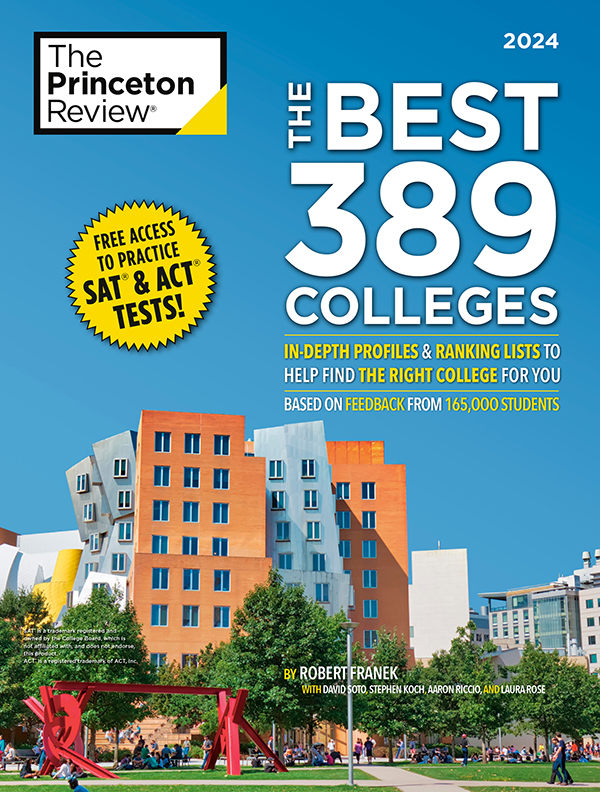
The Princeton Review's "The Best 376 Colleges" for 2012 picked K-State as one of the nation's best institutions for undergraduate education. The Princeton Review also ranks K-State No. 2 in the nation where campus and community relations are great, No. 14 in quality of life and No. 15 in campus food.
The book, which is The Princeton Review's flagship college guide, profiles only about 15 percent of the nation's 2,500 four-year colleges and three colleges outside the United States.
K-State also was named one of the 121 colleges in the "Best in the West" section of The Princeton Review's "2012 Best Colleges: Region by Region." The list includes profiles of 629 schools recognized as the best in four regions: the Northeast, the Southeast, the Midwest and the West. These select schools make up only 25 percent of the nation's four-year colleges.
"It is always nice to be recognized by others for what we have always known to be important at K-State --affordability and a great classroom and residential experience in a classic college setting," said Pat Bosco, K-State's vice president for student life and dean of students. "These ratings are a direct result of the efforts of our faculty and student life staff as well as the relationship that our students and alumni have with the city of Manhattan and the surrounding area. K-State is a great place to live and learn."
The primary criteria for selecting schools in The Princeton Review is outstanding academics, but schools also are selected based on evaluations of institutional data, campus visits, surveys of students, and the opinions of The Princeton Review staff and the company's National College Counselor Advisory Board.
K-State was also ranked one of the country's best schools in Forbes magazine's 2011 Best Colleges List. Forbes' list includes rankings of 650 colleges -- representing the top 20 percent of undergraduate institutions.
LessShooting for STARS: K-State Senior Attends Housing Honors Program in Louisiana
July 19, 2011 -- Working as a resident assistant isn't just a college job for Mitchell Kidd, but the beginning of what could be a meaningful career of helping students.
Kidd, a senior in sociology at Kansas State University from Topeka, is entering his second year as an R.A. at the Jardine Apartment's West End Neighborhood. He was recently invited to attend this year's Association of College ... More
Shooting for STARS: K-State Senior Attends Housing Honors Program in Louisiana
July 19, 2011 -- Working as a resident assistant isn't just a college job for Mitchell Kidd, but the beginning of what could be a meaningful career of helping students.
Kidd, a senior in sociology at Kansas State University from Topeka, is entering his second year as an R.A. at the Jardine Apartment's West End Neighborhood. He was recently invited to attend this year's Association of College ... More
Shooting for STARS: K-State Senior Attends Housing Honors Program in Louisiana
July 19, 2011 -- Working as a resident assistant isn't just a college job for Mitchell Kidd, but the beginning of what could be a meaningful career of helping students.
Kidd, a senior in sociology at Kansas State University from Topeka, is entering his second year as an R.A. at the Jardine Apartment's West End Neighborhood. He was recently invited to attend this year's Association of College and University Housing Officers-International (ACUHO-I) STARS College in New Orleans, La., which took place July 7-9.
Kidd was one of only 55 students selected for this event, which features group presentations, mentoring, role play situations and other activities geared toward promoting student affairs and the university housing profession as a viable career option.
Opportunities to grow professionally continue after the event is over as students can also participate in discussion lists and maintain the relationships formed during the conference. The program also creates an outlet to carry their new knowledge to the outside world, Kidd said.
\"I feel I learned a great deal about many things within this field,\" he said. \"However, my knowledge was most enhanced in the area of understanding how to take the concrete experience I had and representing it on a resume.\"
Kidd transferred to K-State two years ago after attending Washburn University. Tonya Wessel, area coordinator at Jardine Apartments, supervises Kidd and said his experiences as a transfer student have helped him serve the K-State community as a resource and leader.
\"In his year as an R.A., he has emerged as a leader among the staff and makes a commendable effort to connect with the residents,\" said Wessel. \"Mitchell's positive attitude and genuine care for others is contagious. It will be exciting to see where he journeys to in his time after K-State. He will certainly continue to make an impact.\"
Kidd plans to graduate from K-State in May 2012, and then attain a graduate-level education at a yet undermined university. He added that he plans to pursue a career in an area of student life, after his interest was sparked by his enjoyment of being an R.A.
\"I enjoy being a resident assistant because of the friendships I have built with residents and other staff, all in such a short period of time\," said Kidd.
STARS College was founded by Dr. Chuck Werring, former director of K-State Housing and Dining Service.
\"The intent was to create a program for juniors and seniors who showed potential for being effective in any area of student life,\" said Werring. \"They can build upon a given skill set through STARS College and the potential to explore student life as a career.\"
The program's main focus is direct mentoring and coaching, while encouraging the student to consider student life as a profession. Since its founding with Werring's vision nine years ago, STARS College has continued to give undergraduate students the opportunity to explore this profession, 80-85 percent of whom choose to pursue a career in student life.
Less